
A beautifully designed website is more than just digital eye candy — it’s a powerful tool for building trust, driving conversions, and keeping visitors coming back for more. In 2025, great web design strikes a balance between visual appeal and usability, ensuring that every click, scroll, and interaction feels intuitive and rewarding.
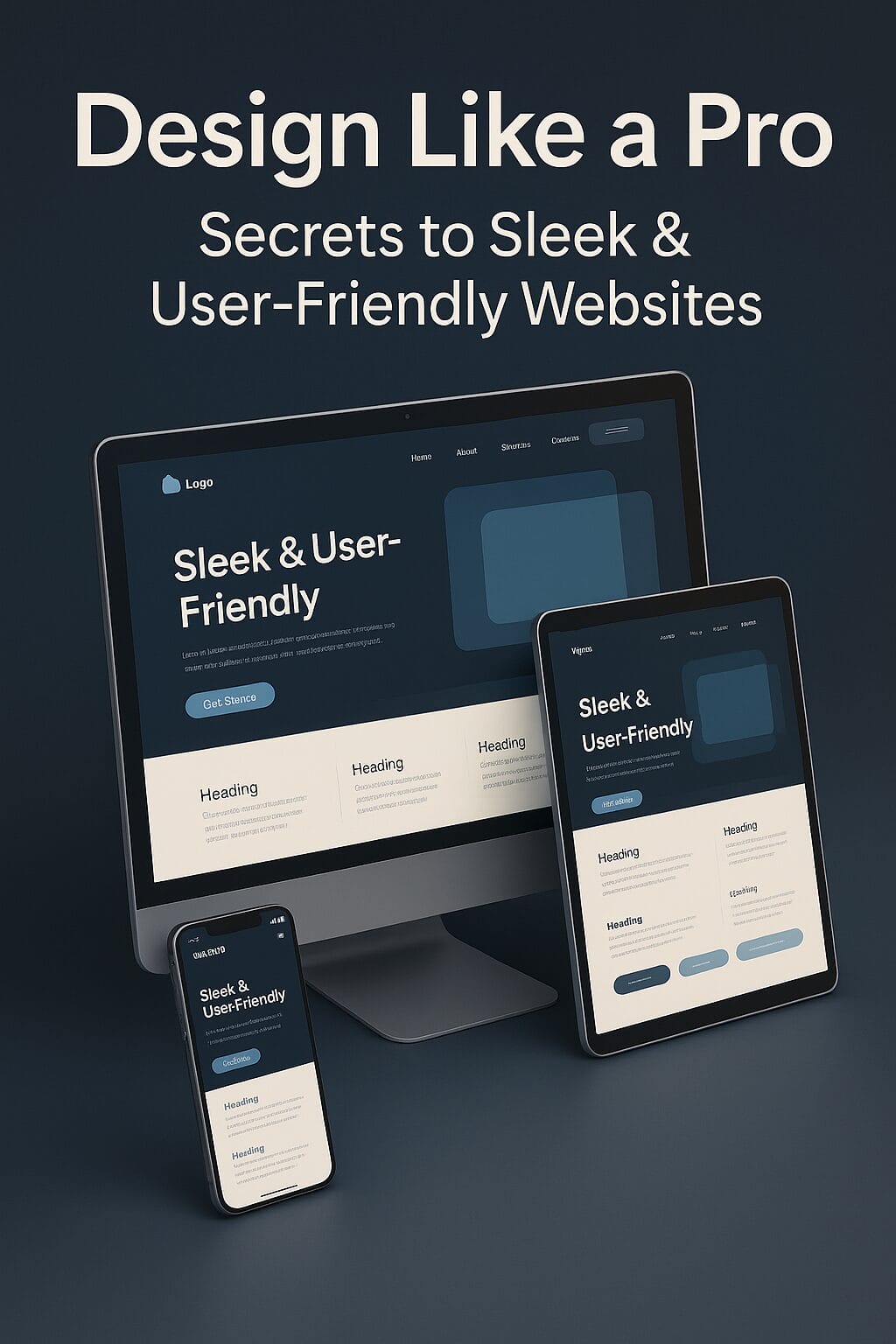
Whether you’re a designer, developer, or a business owner managing your own site, learning the secrets to sleek and user-friendly web design will set you apart from the competition. This guide walks you through the key principles, strategies, and design trends that the pros use to create sites that look stunning and work flawlessly.
1. Start with the User in Mind
The foundation of every sleek and user-friendly site is user-centered design. Before choosing colors or adding animations, ask yourself:
-
Who is my target audience?
-
What problems are they trying to solve on my site?
-
How can I make their journey effortless?
Pro Secret: Map out a user journey before you start designing. Identify the main actions you want visitors to take (sign up, purchase, read more) and remove as many obstacles as possible between their entry point and that action.
2. Prioritize Mobile-First Design
Over 60% of web traffic now comes from mobile devices — and that number keeps climbing. Professional designers think mobile-first, meaning they design for smaller screens first and then scale up for desktops.
Why it works:
-
Mobile-first ensures your site is fast, responsive, and uncluttered.
-
Google prioritizes mobile-friendly sites in search rankings.
-
It forces you to focus on essential content and discard unnecessary clutter.
3. Master the Art of Whitespace
Whitespace (or negative space) is the empty space between elements on a page. Many beginners fear whitespace, thinking it’s “wasted” space. In reality, professionals use it strategically to:
-
Make content easier to read
-
Draw attention to key elements
-
Give designs a modern, uncluttered feel
4. Choose a Harmonious Color Palette
Color can make or break your design. Pros stick to a limited color palette — usually a dominant brand color, a secondary accent color, and one or two neutrals.
Why this works:
-
Creates visual consistency across your site
-
Enhances brand recognition
-
Guides the user’s attention to important actions
5. Typography Matters More Than You Think
Your choice of fonts impacts readability, mood, and professionalism. Sleek websites typically use two complementary typefaces — one for headings and one for body text.
Pro Secrets for Typography:
-
Choose web-safe fonts to ensure compatibility across browsers.
-
Keep body text between 16–18px for comfortable reading.
-
Maintain consistent line spacing (about 1.5x font size) for readability.
6. Navigation Should Be Effortless
A sleek site loses its charm if users can’t find what they need. Professional designers keep navigation simple, predictable, and accessible.
Best Practices:
-
Keep your main menu to 5–7 items.
-
Use clear labels instead of clever but confusing names.
-
Include a visible search function.
7. Use High-Quality, Optimized Images
Crisp, high-resolution visuals instantly elevate your design. But quality alone isn’t enough — images must also be optimized for web to ensure fast loading times.
Pro Secrets:
-
Use next-gen formats like WebP for smaller file sizes without losing quality.
-
Compress images with tools like TinyPNG or Squoosh.
-
Stick to authentic photography and avoid overly generic stock images.
8. Speed is a Design Element
Even the sleekest design fails if it loads slowly. Studies show that a 1-second delay can reduce conversions by up to 7%.
Pro Speed-Boosting Tips:
-
Minimize the number of HTTP requests.
-
Use lazy loading for images and videos.
-
Implement a content delivery network (CDN).
9. Consistency Builds Trust
Professional designers ensure every page of a site feels like part of the same story. This means consistent:
-
Fonts
-
Colors
-
Button styles
-
Image treatments
-
Icon sets
Pro Tip: Create a style guide to keep branding consistent, especially if multiple people work on the site.
10. Accessibility is Non-Negotiable
In 2025, sleek design is also inclusive design. Accessibility ensures your site can be used by people with disabilities, and it’s increasingly important for legal compliance.
Pro Accessibility Checklist:
-
Use descriptive alt text for images.
-
Maintain strong color contrast.
-
Make your site navigable via keyboard.
-
Provide captions for video content.
11. Add Subtle Interactivity
Microinteractions — like hover effects, button animations, or scroll-triggered reveals — make your site feel polished and responsive.
Why Pros Use Them:
-
They guide users toward actions.
-
They provide feedback (e.g., a form button changes color when clicked).
-
They create a sense of delight without overwhelming the design.
12. Content and Design Go Hand-in-Hand
No matter how sleek your design, it’s the content that keeps people engaged. Pros design layouts around the content — not the other way around.
Best Practices:
-
Break text into short paragraphs.
-
Use bullet points for easy scanning.
-
Highlight key phrases with bold or color.
13. Test, Tweak, and Improve
Even the best designs can be improved. Professionals regularly A/B test headlines, button placements, and color schemes to see what resonates most with users.
Pro Tip: Use tools like Hotjar or Google Analytics to understand how visitors interact with your site — and make data-driven changes.
14. Keep Up with Trends — But Don’t Rely on Them
Trends like glassmorphism, neumorphism, and 3D elements can make your site pop — but they should enhance usability, not replace it. Professionals use trends sparingly to avoid looking outdated when the trend fades.
Final Thoughts
Designing a sleek, user-friendly website isn’t about cramming in every flashy effect or following every trend. It’s about creating a space where form meets function, where visitors feel comfortable, engaged, and inspired to take action.
By focusing on user needs, maintaining visual harmony, and embracing best practices in usability and accessibility, you’ll not only design like a pro — you’ll build websites that leave a lasting impression.
Leave a Reply